
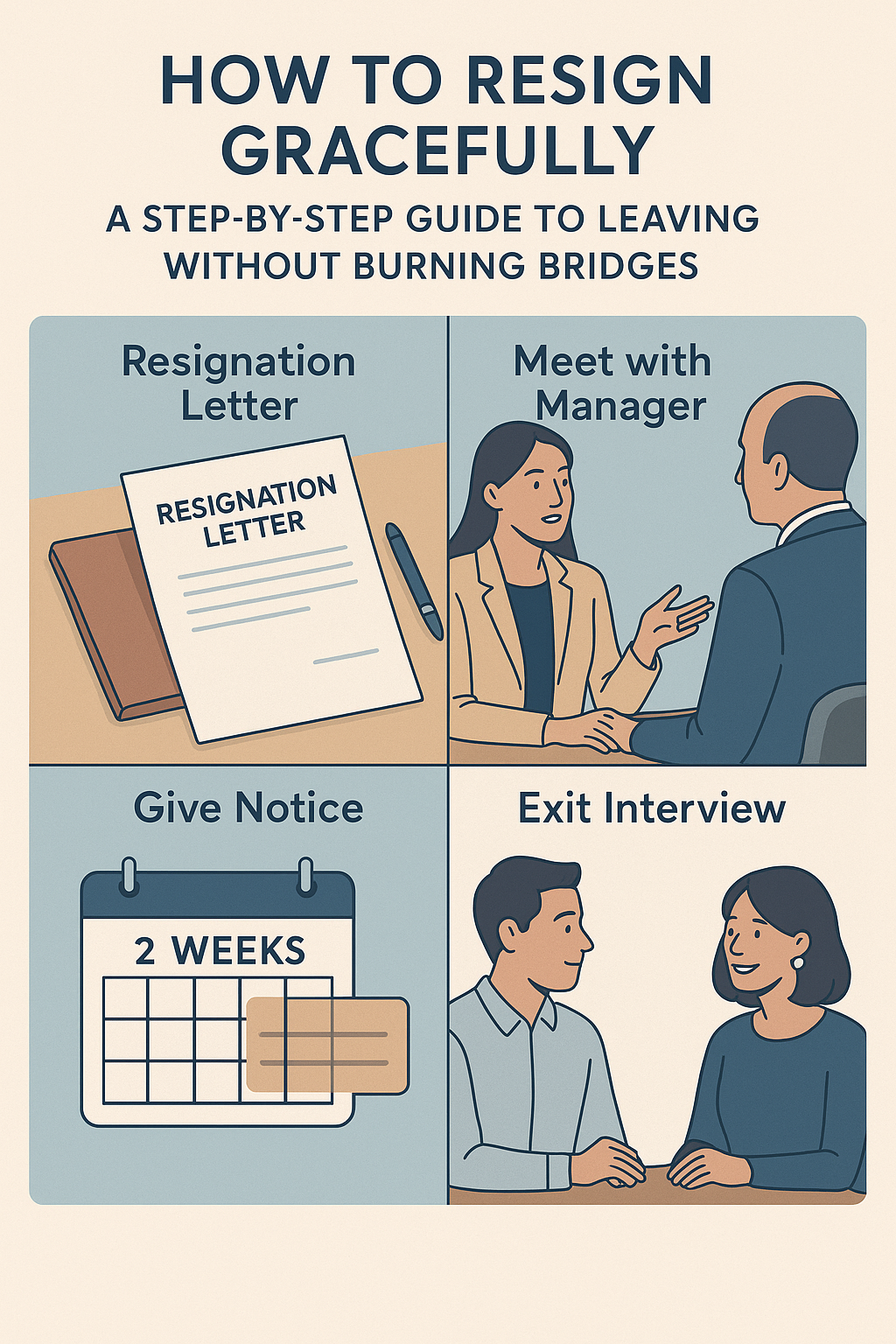
How to Resign Gracefully: A Step-by-Step Guide to Leaving Without Burning Bridges
You’ve done it. You navigated the job search, cracked the interviews, negotiated a great salary, and signed the offer letter for your dream job. You should be celebrating. Instead, you feel a knot of dread in your stomach.
Why? Because you still have to do the one thing most professionals hate: You have to quit your current job.
Resigning is essentially a professional breakup. It is filled with guilt ("I'm abandoning my team"), fear ("What if my boss gets angry?"), and awkwardness ("How do I act during my notice period?").
In the heat of the moment, it is tempting to check out mentally, write a hasty email, or vent your frustrations. Do not do this. The world is small, and industries are even smaller. The boss you leave on bad terms today could be the hiring manager at your dream company five years from now. Your "Ex" employer controls your exit documents, your background verification, and your future references.
Resigning gracefully is a strategic skill. It is about protecting your reputation and ensuring you are remembered as a professional who finished strong, not as a mercenary who fled. This guide gives you the exact roadmap, scripts, and templates to manage your exit with class.
Step 1: The Logistics (Read Before You Leap)
Before you schedule "The Talk," check your paperwork. * The Notice Period: Check your employment contract. In India, notice periods can range from 30 to 90 days. Know your obligation. * The Bond: Are you under any service bond? (See our Guide on Employment Bonds). * The Leaves: Do you have unused Privilege Leave (PL)? Check the policy on encashment.
Step 2: The "Boss First" Rule
Never, ever let your boss find out you are leaving from a rumor, a tweet, or a colleague. They must be the first to know. * Schedule a Meeting: Don't do it over email or chat. Book a 15-minute slot. If remote, get on a video call. * The Script: Keep it short and professional. > "I requested this time because I’ve decided to move on to a new opportunity. This wasn't an easy decision, as I've truly enjoyed my time here, but I've found a role that aligns closely with my long-term career goals. My last day will be [Date]."
What NOT to say: * "I'm leaving because the pay is terrible." * "I hate the new management." Even if these are true, saying them now serves no purpose. Save the constructive feedback for the exit interview (maybe).
Step 3: The Resignation Letter (The Formal Record)
After the verbal conversation, send the formal email immediately. This starts the clock on your notice period.
Template:
Subject: Resignation - [Your Name]
Dear [Manager's Name],
Please accept this email as formal notification that I am resigning from my position as [Job Title]. My last day will be [Date], as per the notice period clause in my contract.
I would like to thank you for the opportunities I have had at [Company Name] over the last [Number] years. I have learned a great deal, and I am grateful for your guidance.
I am committed to ensuring a smooth transition over the next few weeks and will do everything possible to hand over my responsibilities seamlessly.
Best regards, [Your Name]
Tip: Keep it legal and polite. Do not over-explain.
Step 4: Surviving the Notice Period (The "Lame Duck" Phase)
In India, notice periods can be long (up to 3 months). This is the "Danger Zone." * Don't Check Out: It is tempting to slack off. Don't. You will be remembered for your last 30 days more than your first 3 years. * Create a Handover Document: This is your legacy. Create a detailed document with: * Status of all ongoing projects. * Login credentials (for shared tools). * List of key contacts for each project. * "How-to" guides for your daily tasks. * Don't Be Toxic: Do not brag about your new salary to colleagues or complain about the company. You are leaving; let those who stay remain positive.
Step 5: Handling the Counter-Offer (The Trap)
When you resign, your boss might panic and offer you more money to stay. * The Statistic: Research shows that 80% of people who accept counter-offers leave within 6 months anyway. * The Reality: The trust is broken. They now know you looked elsewhere. They are often just buying time to find your replacement. * The Response: "I’m flattered, but I’ve already committed to the new organization, and I want to honor my word. This isn't about the money; it's about the new career direction."
Step 6: The Exit Interview (Diplomacy vs. Honesty)
HR will likely conduct an exit interview. They will ask, "Why are you really leaving?" * The Trap: Using this as a therapy session to vent about your toxic boss. * The Strategy: Be constructive but vague. * Instead of: "My manager is a micromanager." * Say: "I’m looking for a role with a bit more autonomy in decision-making." * Instead of: "The pay is low." * Say: "The new offer provided a compensation package that was difficult to turn down."
Your goal is to leave a file that says "Eligible for Rehire," not "Disgruntled Employee."
Conclusion: The "boomerang" Effect
The tech and corporate world is a revolving door. "Boomerang employees" (people who leave and come back later at a higher level) are increasingly common. By resigning with grace, gratitude, and professionalism, you keep that door open.
Leave the campsite cleaner than you found it. Hand over your work diligently, thank your mentors, and walk out with your head high.
Now that you've resigned, make sure you are fully prepared for your new role. Review our First 90 Days Guide to hit the ground running.
For more career lifecycle advice, https://jobpe.com.

