
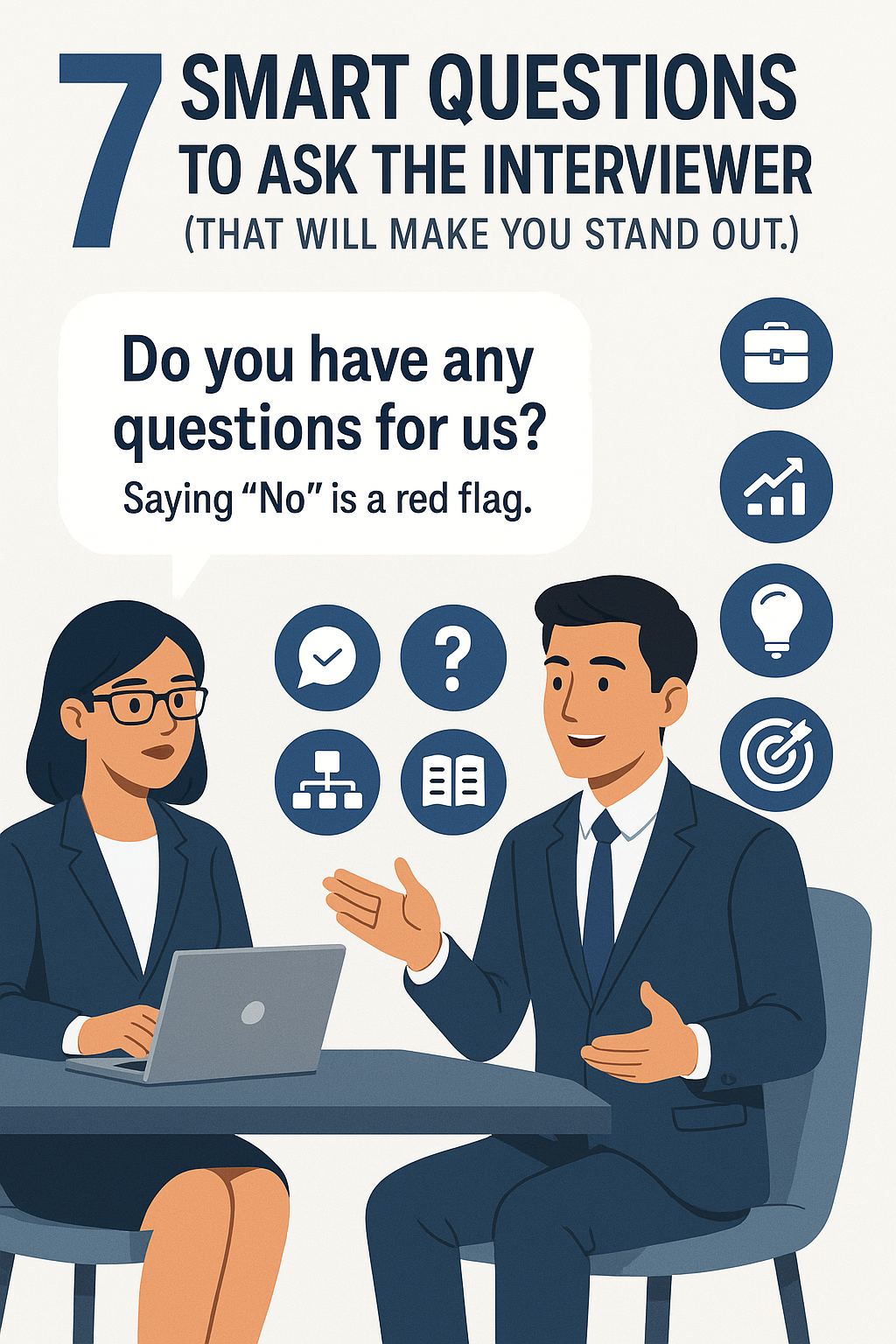
7 Smart Questions to Ask the Interviewer (That Will Make You Stand Out)
The interview is going well. You answered the technical questions perfectly. You nailed the "Tell me about yourself" pitch. You are feeling confident.
Then, the interviewer closes their notebook, looks at the clock, and asks:
"So, do you have any questions for us?"
This is the most dangerous moment of the interview.
Most candidates breathe a sigh of relief and say: "No, I think you covered everything. Thanks!"
This is a mistake.
In the recruiter's mind, saying "I have no questions" signals two things: 1. Lack of Curiosity: You aren't interested enough to dig deeper. 2. Desperation: You will take anything they give you without checking the details.
An interview is a two-way street. You are interviewing them just as much as they are interviewing you. This is your chance to uncover red flags, understand the company's real challenges, and show that you are thinking strategically about the role.
Here are 7 "Power Questions" to ask at the end of an interview that will leave a lasting impression.
Category 1: The "Success" Questions (Showing You Are Results-Driven)
These questions show that you are already thinking about how to win in the role.
1. "What does success look like in this role in the first 90 days?"
- Why it works: It shows you are eager to hit the ground running. It also forces the manager to give you clear expectations. If they can't answer this, it means they haven't thought about the role clearly (a red flag).
2. "What is the single biggest challenge the team is facing right now, and how can this role help solve it?"
- Why it works: This is a "consultant" question. It shifts the conversation from "hiring an employee" to "solving a business problem." It allows you to tailor your final closing pitch to that specific problem.
Category 2: The "Culture" Questions (Uncovering the Truth)
Don't ask "What is the culture like?" (They will just say "It's great!"). Ask specific behavioral questions to get the truth.
3. "How does the team handle failures or missed deadlines? Can you give an example?"
- Why it works: This reveals psychological safety. Do they blame and punish? Or do they support and learn? Their reaction to this question tells you everything you need to know about toxicity.
4. "What is the most common reason people stay at [Company] long-term, and why do people usually leave?"
- Why it works: It is bold. It forces them to be honest about retention. If they get defensive about why people leave, run.
Category 3: The "Future" Questions (Showing Long-Term Intent)
5. "I noticed [Company] recently launched [Product/Feature]. How does this team support that strategic goal?"
- Why it works: It proves you did your homework (researched the news) and that you care about the big picture, not just your daily tasks.
6. "How has this role evolved over the last year, and where do you see it going in the next 2 years?"
- Why it works: It shows you are looking for a career, not a gig. It also helps you understand if there is a path for promotion.
Category 4: The "Closing" Question (Sealing the Deal)
7. "Is there anything about my background that you are unsure about, which I can clarify right now?"
- Why it works: This is the ultimate sales move. It gives you a chance to address any hidden doubts they might have before you leave the room. If they say, "Well, we are worried you lack experience in X," you can immediately counter it: "I’m glad you asked! Actually, I did a project on X..."
What NOT to Ask (The "Rookie" Mistakes)
Avoid these questions in the first interview. They make you look self-interested or unprepared.
- "What does your company do?" (You should already know this. Instant rejection.)
- "How much vacation time do I get?" (Save this for the offer stage. Asking too early makes it look like you are already planning your exit.)
- "How quickly can I get promoted?" (Focus on doing the job first, then talking about promotion.)
- "Did I get the job?" (Too aggressive. Puts them on the spot.)
How to Handle the "No Questions" Panic
If your mind genuinely goes blank, have this safety script ready:
"You actually answered my main questions about the team structure and the projects during our chat. But I am curious—what is your personal favorite part about working here?"
It connects on a human level and ends the interview on a positive note.
Conclusion: The Final Impression
The questions you ask say more about your intelligence than the answers you give. A candidate who asks smart, probing questions is seen as a peer, not a subordinate.
Write these 7 questions in your notebook. Bring the notebook to the interview. When the moment comes, open it and ask away.
To prepare for the answers they might give you, research the company's recent news and challenges on JobPe Companies.
For more interview mastery guides, https://jobpe.com.

